Naming Ceremony in Ghana: A Respectful Diaspora Guide
Naming Ceremony in Ghana: A Respectful Diaspora Guide
Learn how to arrange a naming ceremony in Ghana, what community protocol means, and how diaspora travelers can participate respectfully.
Written by Herit360 Editorial Team | Operational review: Herit360 Destination Operations | Last reviewed: August 2026
QUICK ANSWER A naming ceremony in Ghana is not one universal product. Meaning, language, hosts, sequence, and permissions vary by community. Travelers should ask who is leading the ceremony, what the name signifies, what participation is expected, and what is confirmed—without assuming the ceremony proves biological ancestry, grants status, or follows every Ghanaian tradition. |
Receiving a Ghanaian name can be a moving part of a heritage journey. For some diaspora travelers, it marks a personal return. For others, it creates a lasting connection to the people and place that welcomed them.
Yet the phrase “naming ceremony in Ghana” can be misleading. Ghana does not have one national ceremony performed in exactly the same way everywhere. Traditions differ between ethnic groups, families and communities. A ceremony arranged for an adult diaspora visitor is also not necessarily the same as the outdooring held for a Ghanaian child.
Understanding that distinction is the first step toward making the experience meaningful.
What is a traditional Ghanaian naming ceremony?
In many Ghanaian cultures, naming forms part of the ceremonies that formally welcome a child into the family and community. It may involve prayers, the presentation of the child, recognition of family members, the announcement of names and symbolic actions intended to encourage truth, good character and a responsible life.
Some traditions hold the ceremony around the eighth day after birth. However, the timing, language, participants and symbols vary.
Ghana’s national curriculum itself treats naming practices as something students should study and compare across different Ghanaian cultures. That is a useful reminder that no single description represents the whole country. National Council for Curriculum and Assessment
Is a diaspora naming ceremony the same thing?
Not always.
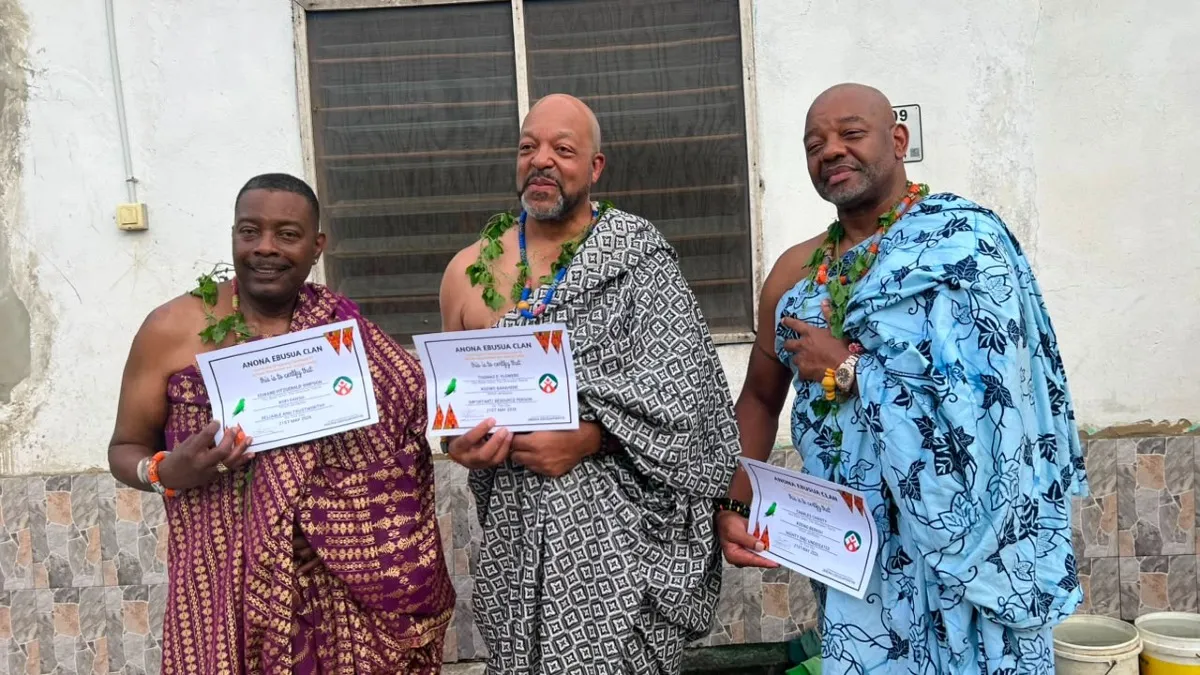
A naming ceremony arranged for an adult diaspora traveler is usually a cultural welcome or heritage experience adapted in consultation with a family, elder, traditional authority or community.
Depending on the hosts, it may include:
· An explanation of the community’s naming tradition
· Prayers, blessings or libation
· The announcement of a Ghanaian name
· Words from elders or community representatives
· Traditional music, drumming or dancing
· A presentation of cloth, beads or another keepsake
· A shared meal
· Family or community photographs
The ceremony may feel intimate and personal, but its meaning should be explained clearly beforehand. Travelers should know who is conducting it, which tradition is being followed, and why a particular name has been selected.
Will I receive a Ghanaian day name?
Possibly, but a day name should not be treated as the full definition of Ghanaian naming culture.
Akan communities are particularly well known for names associated with the day of the week on which a person was born. Variations of day-naming traditions also appear elsewhere, but pronunciation, spelling and meaning can differ.
Not every Ghanaian culture uses the same day-name system. Some names reflect family lineage, circumstances surrounding a birth, religious belief, admired relatives, expected character, or events taking place at the time.
If a ceremony includes a day name, ask which language and cultural tradition it comes from. Explain a name rather than selecting it from a generic chart found online.
Who should arrange the ceremony?
A responsible ceremony requires a genuine host.
That may be:
· A Ghanaian family with an established relationship to the traveler
· A recognized community representative
· A traditional or cultural authority
· An elder authorized by the participating family or community
· A cultural institution working with appropriate local custodians
A tour operator can coordinate communication, transportation, clothing, meals and other logistics. It should not invent a ceremony, appoint an unrecognized person as an elder or promise royal participation without written approval.
Herit360’s role, for example, is to coordinate a properly confirmed experience with an approved host. The community or cultural authority remains responsible for the ceremony’s meaning and protocol.
Questions to ask before booking
Before adding a naming ceremony to a Ghana heritage trip, ask:
Which cultural tradition will be represented?
“A Ghanaian ceremony” is too vague. The organizer should identify the community, language or cultural tradition involved.
Who will conduct it?
Request the host’s role and relationship to the community. This does not require disclosing private family information, but the authority behind the experience should be clear.
How will the name be chosen?
It may be based on the traveler’s birth date, personal story, qualities, family discussion, or the host community’s tradition. Ask whether the name will be explained in writing.
What should I wear?
Some ceremonies may recommend traditional clothing or a particular colour. Others simply ask guests to dress modestly and respectfully.
If a custom outfit is required, allow enough time for production. Do not promise handwoven or bespoke garments for immediate delivery without confirmation from the maker.
Are photographs and videos permitted?
Do not assume every part of the ceremony can be recorded. Ask whether there are private moments and whether community members consent to appearing in photographs.
What payments or gifts are expected?
The full price should show coordination costs, host or facilitator fees, clothing, food, photography, transportation and any community contribution. Guests should not discover compulsory payments during the ceremony.
What the ceremony does not automatically provide
A cultural naming ceremony does not, by itself:
· Prove biological ancestry from the host community
· Create Ghanaian citizenship
· Change the name on a passport or legal document
· Confer a royal title
· Establish legal adoption
· Guarantee membership of a clan or traditional family
· Provide permission to speak for the community
A ceremony may create a sincere relationship, but you should describe that relationship honestly.
Travelers seeking a legal name change, citizenship or formal immigration status need to follow the relevant government process separately.
Can a naming ceremony be combined with a heritage journey?
Yes. It works particularly well toward the end of a longer heritage trip.
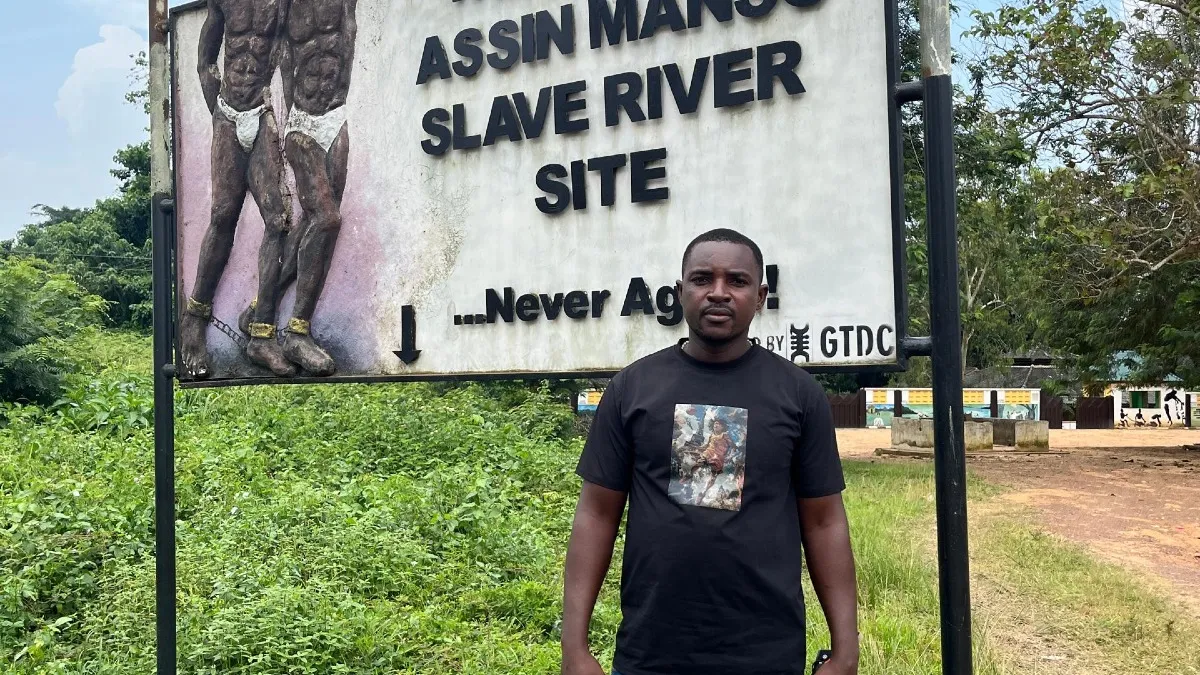
By then, the traveler may already have experienced Accra’s Pan-African history, Assin Manso, the coastal castles, Kumasi and a craft or community activity. The ceremony becomes part of a broader learning process rather than an isolated performance.
A thoughtful sequence might include:
· Historical and cultural orientation
· Accra’s Pan-African heritage
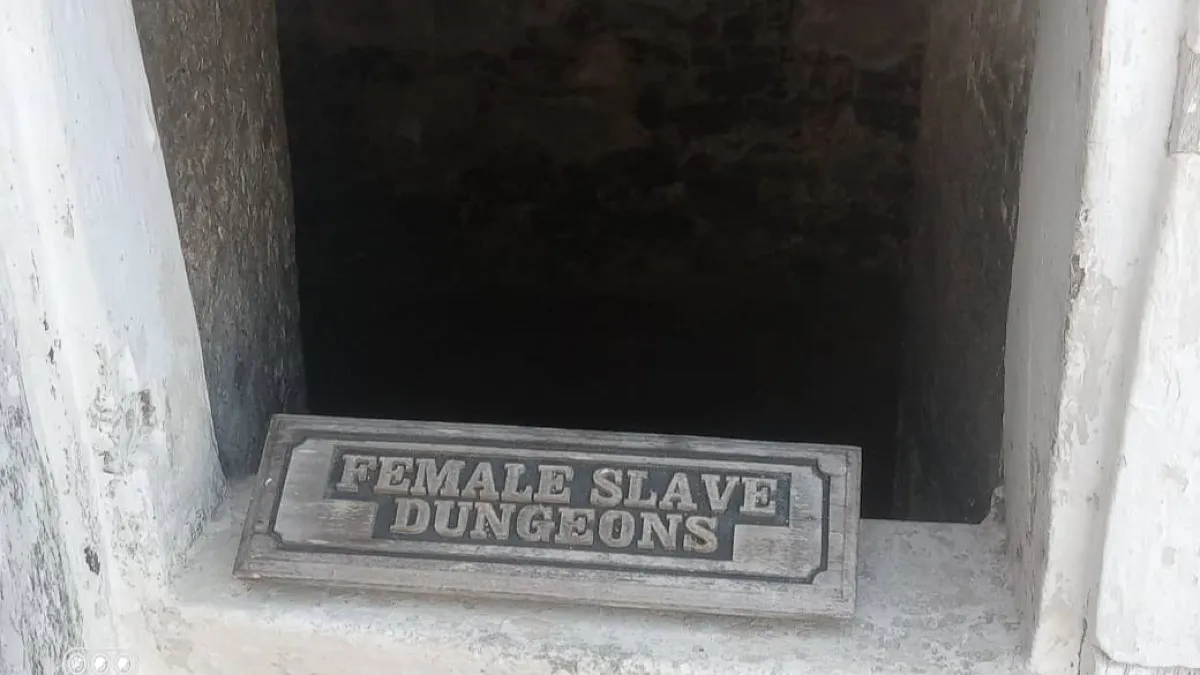
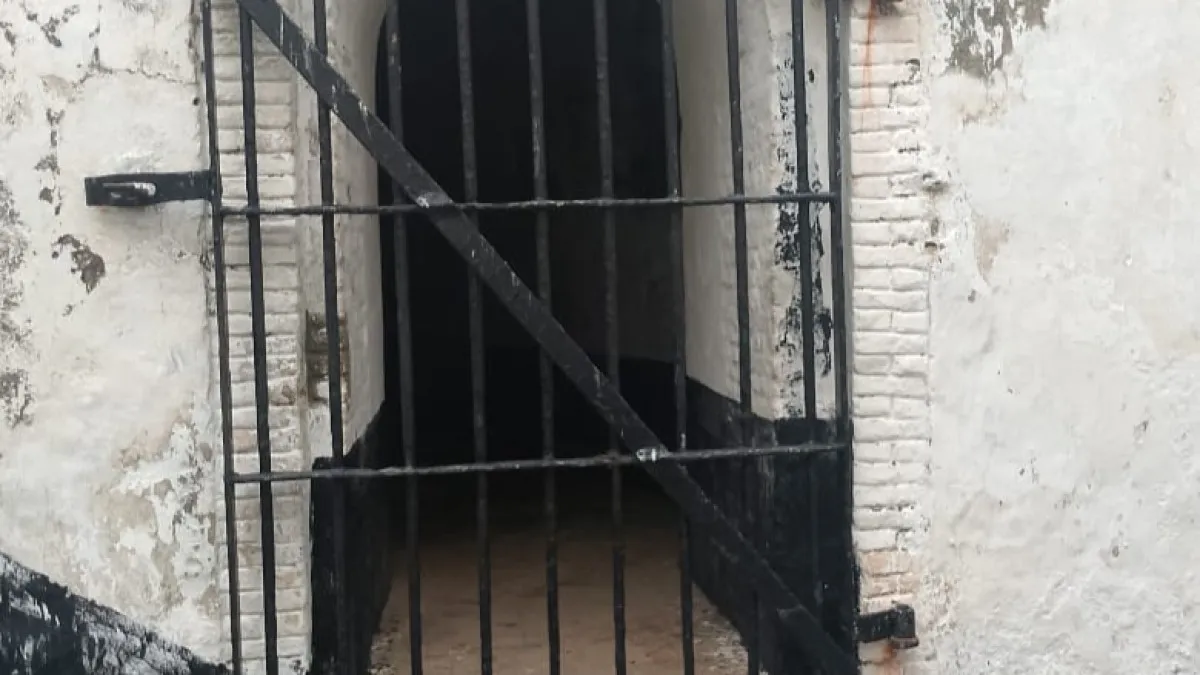
· Assin Manso and the coastal remembrance route
· Kumasi or another living-heritage region
· Community introduction and protocol briefing
· Naming ceremony
· Celebration meal and reflection
Avoid scheduling the ceremony immediately after a long road transfer. Guests and hosts should have enough time to prepare.
How to participate respectfully
Arrive on time. Learn how to pronounce the names of your hosts. Listen when the meaning of the ceremony is explained. Follow instructions concerning seating, greetings, gifts and photography.
Do not pressure an elder to make unsupported ancestral claims. Do not advertise yourself publicly using a title that was not formally given. If community members contribute time, knowledge, music, food or craft, make sure their work is compensated.
Most importantly, treat the ceremony as the beginning of a relationship, not a souvenir from a trip.
Herit360 coordinates naming and community-welcome experiences as part of customizable Ghana heritage journeys. Every ceremony is subject to host approval, cultural protocol and availability. The participating community, ceremony format, inclusions and full price are confirmed before booking.
Frequently Asked Questions
Is every Ghanaian naming ceremony the same?
No. Practices vary by ethnic group, community, family and host. The format should be explained before payment rather than marketed as a single nationwide ritual.
Does receiving a Ghanaian name prove ancestry?
No. A ceremonial name may express welcome, meaning or relationship, but it does not by itself prove a biological link to a specific family or community.
How far in advance should I arrange a ceremony?
Arrange it as early as possible so the host, purpose, contribution, clothing, photography, language and community protocol can be confirmed properly.
Related Herit360 Guides
· Roots Trip to Ghana: How to Plan a Personal Homecoming
· Ghana Heritage Tour: Plan a Meaningful Roots Journey
· Best Time to Visit Ghana: Weather, Events and Prices
Create a naming experience that is personal and properly coordinated Naming ceremonies require advance community confirmation and should never be treated as a generic tourist performance. Herit360 can coordinate an appropriate ceremony as part of a wider heritage journey. PACKAGE View Roots & Return CUSTOM QUOTE Request a Naming Ceremony Consultation WHATSAPP Ask Herit360 We confirm ceremony format, community participation, and availability before booking. |